Teaching dentists new skills,
and giving them the tools to use them
Dental school doesn't teach implant systems, overdenture components, or full-arch surgery. Zest Dental Solutions does. As the digital designer on Zest’s marketing team it was my job to design the materials that got dentists in the room, trained, and converted that training into lasting product adoption.


THE PROBLEM:
Zest makes highly specialized dental products which require skills dentists are not taught in school but through continuing education or CE credits which they must earn every renewal cycle to maintain their license. This recurring moment of professional development is Zest's opportunity; Zest offers a course which earns dentists CE credits and trains them on Zest’s products. This only works if dentists trust the course, trust the instructor, and believe the skill is worth adding to their practice. Zest’s challenge is they can't just market a product, they have to market an entirely new clinical capability.
AWARENESS WORK:
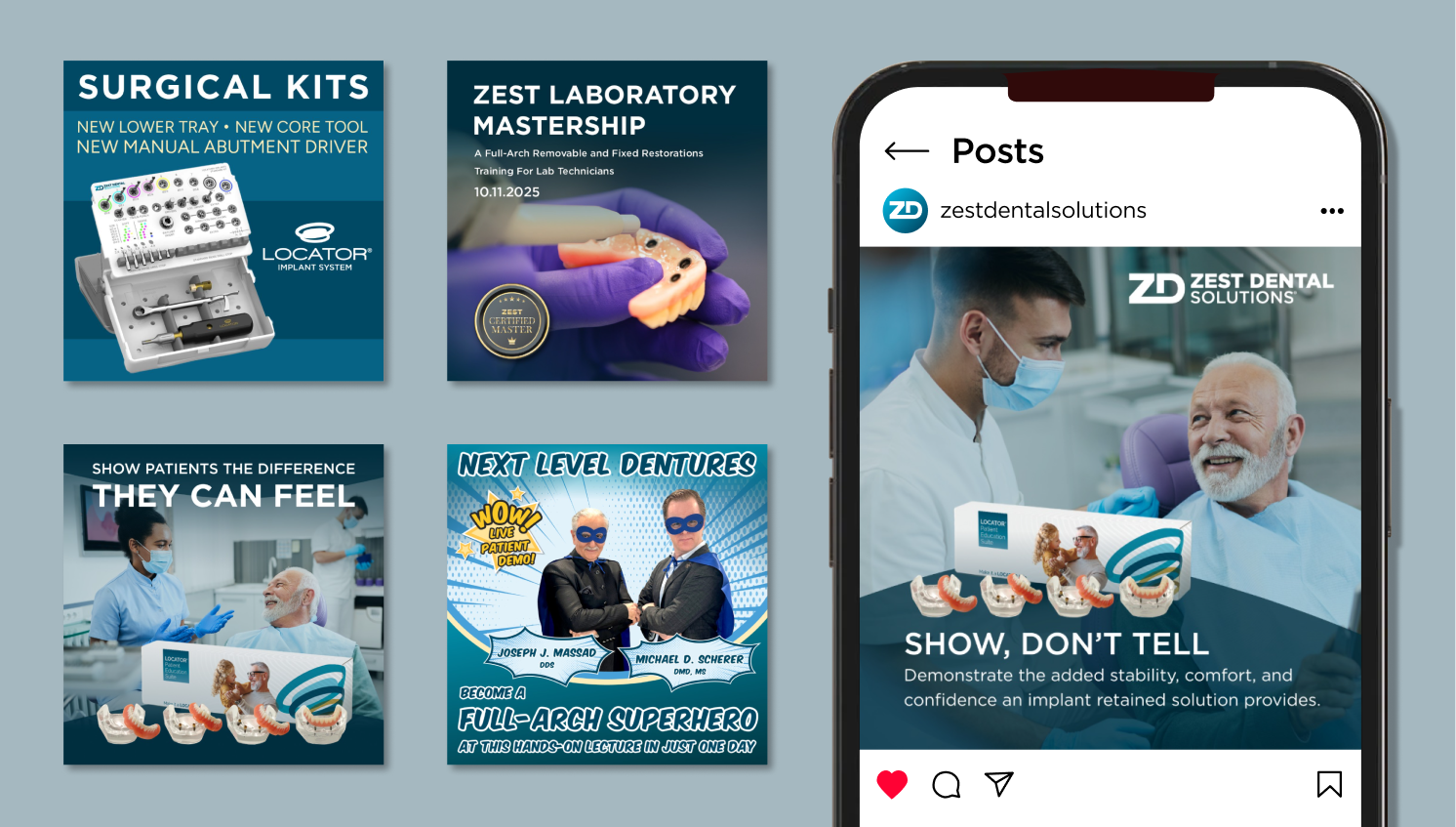
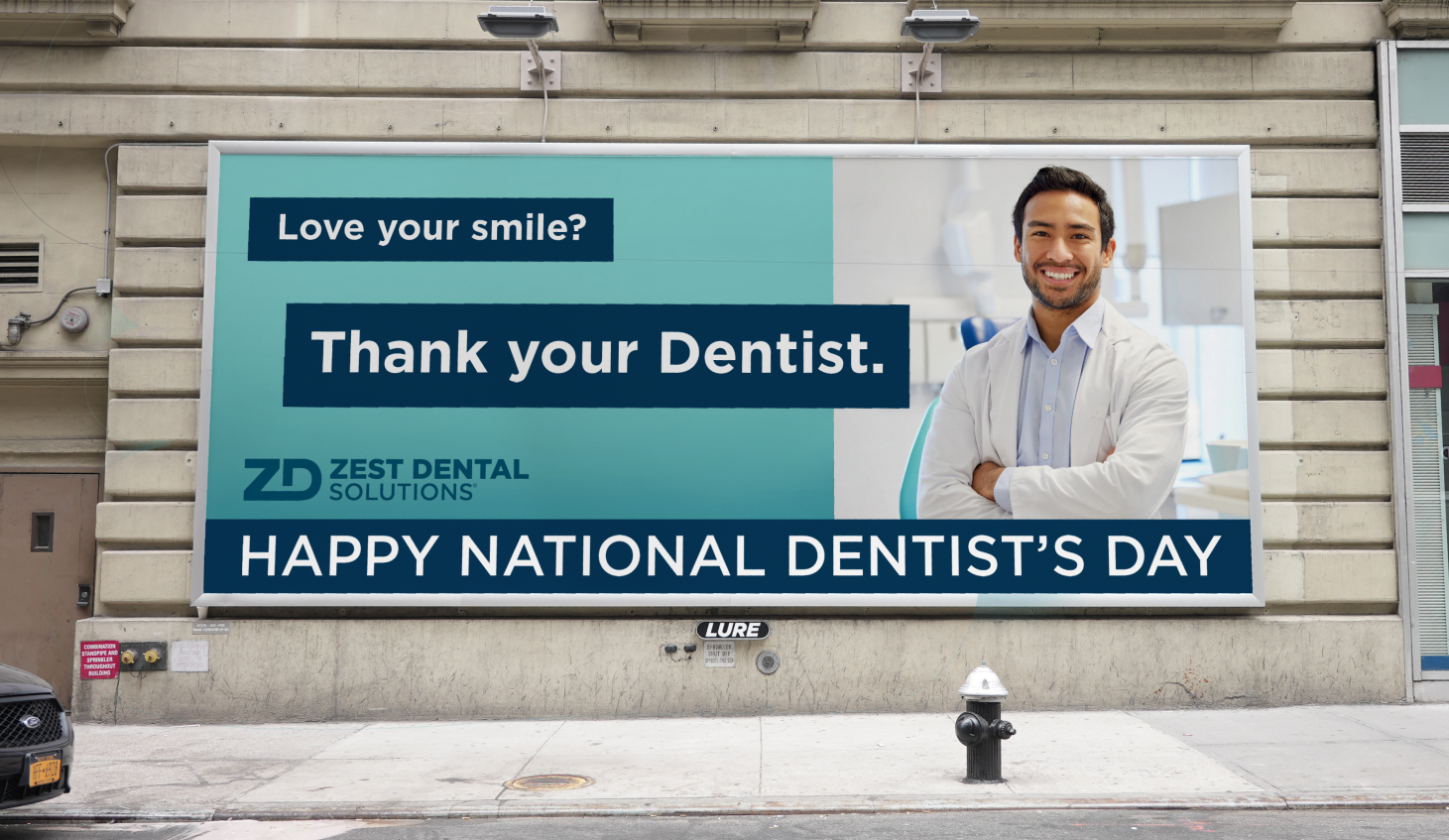
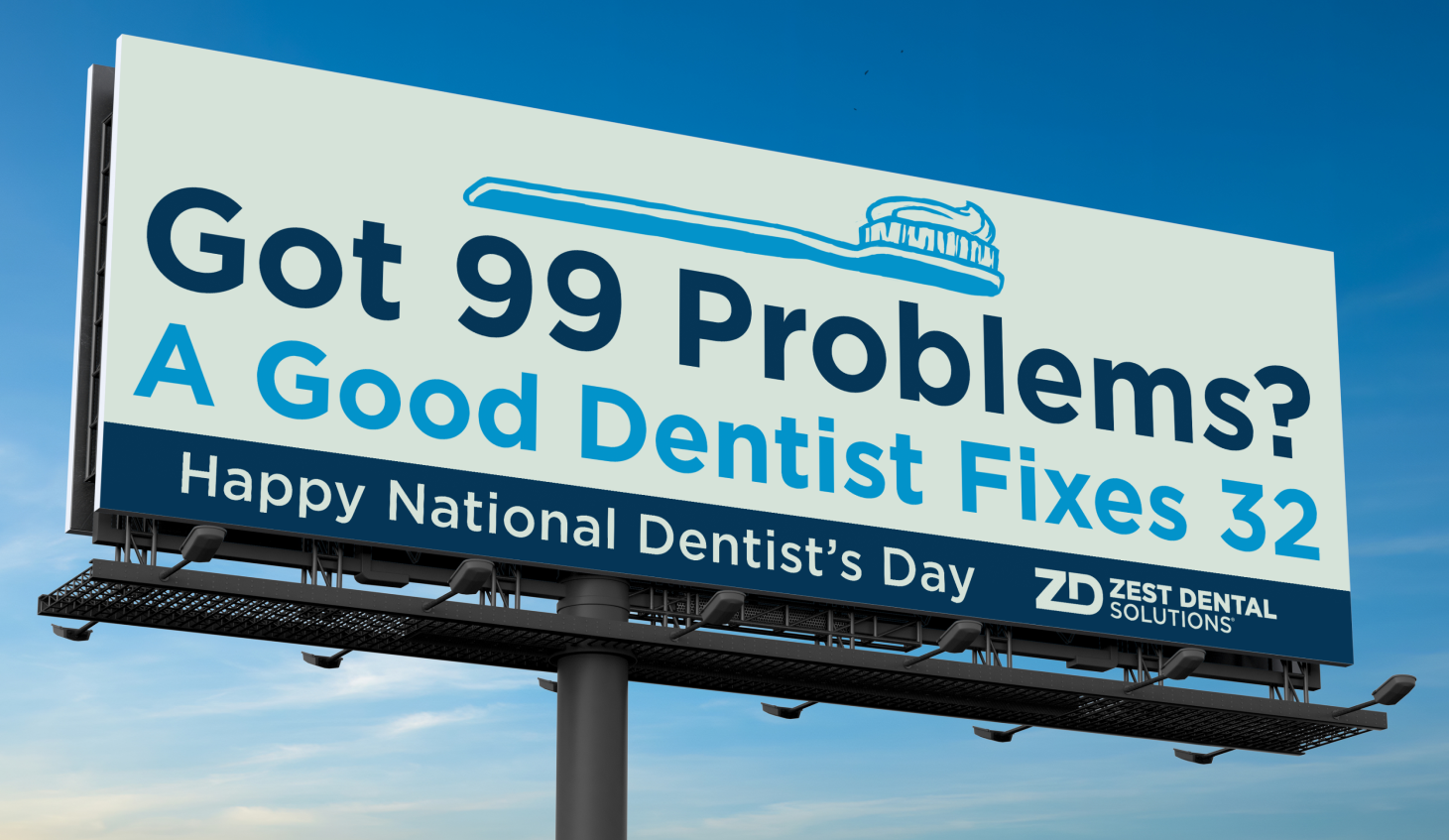
Before a dentist might enroll in a course or consider a product, they have to know Zest exists. We built awareness through campaigns that led with enough personality to stand out in a conservative, credential-driven industry without sacrificing the professional credibility the audience demanded.
THE STRATEGY:
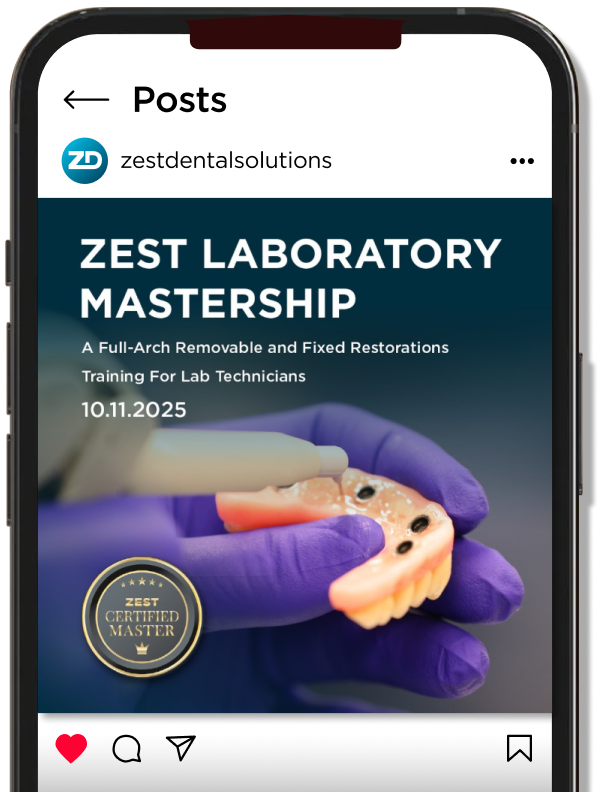
Rather than defaulting to traditional product marketing, we built a full-funnel system anchored around training dentists in a new skill made possible by our products which lets then expand their practice to new patients. These CE courses, Zestmasters and Zest Academy, were the lead magnet and the product. Zestmasters featured instructors dentists recognized from dental school curricula and dental social media. That credibility did heavy lifting at the top of the funnel, and every piece of collateral we built had to match it.
We weren't selling implants. We were selling the ability to treat a patient type that most dentists were currently turning away.
ZESTMASTERS: WHEN I JOINED
ZestMasters courses were chronically underenrolled. Seats went unfilled, sessions ran half-empty, and the program wasn't building the practitioner relationships it was designed for.
ZESTMASTERS: AFTER OUR CAMPAIGN

Every course sold out, with waitlists formed for every class on the schedule. We transformed ZestMasters into a program dentists actively sought out.
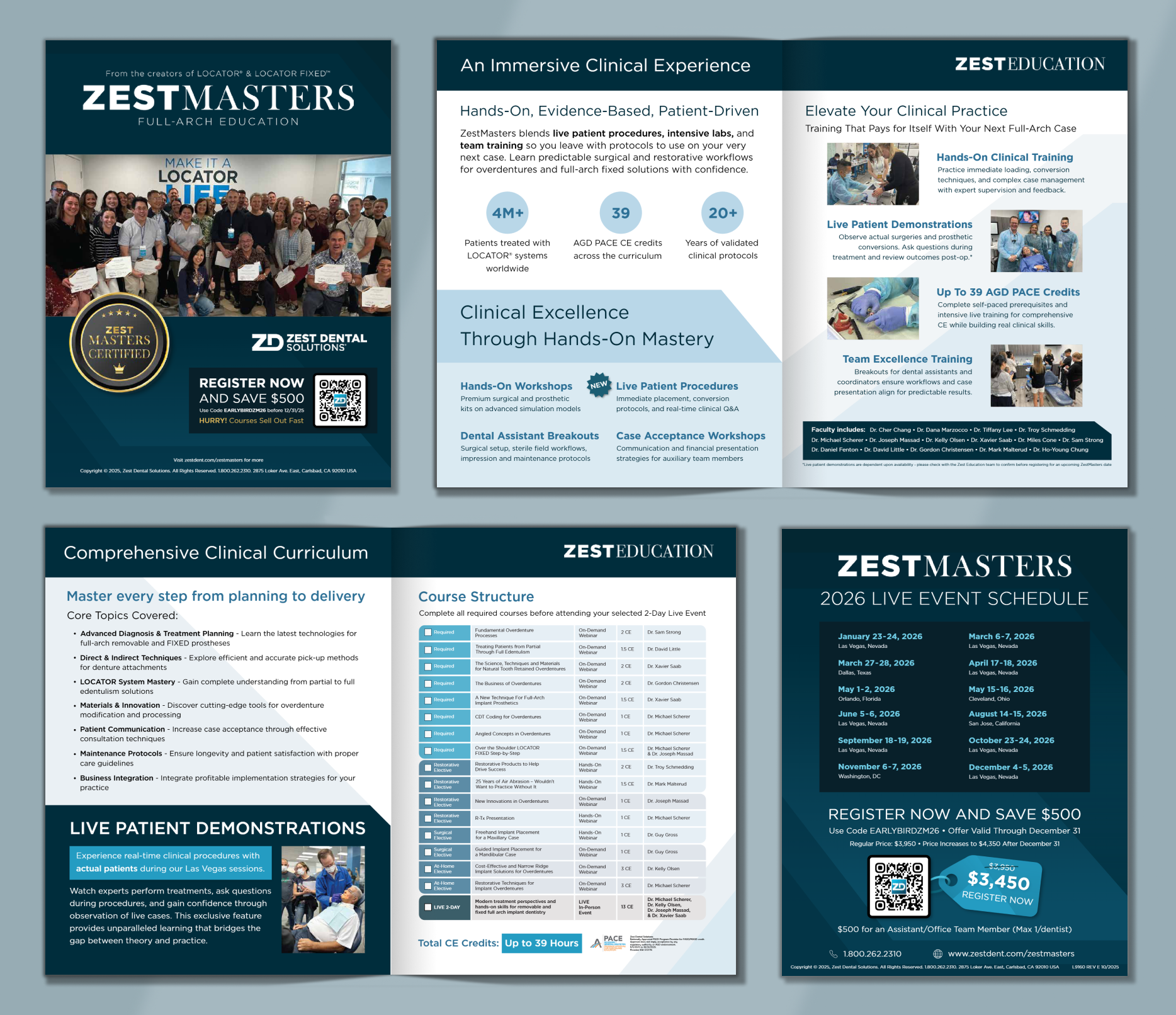

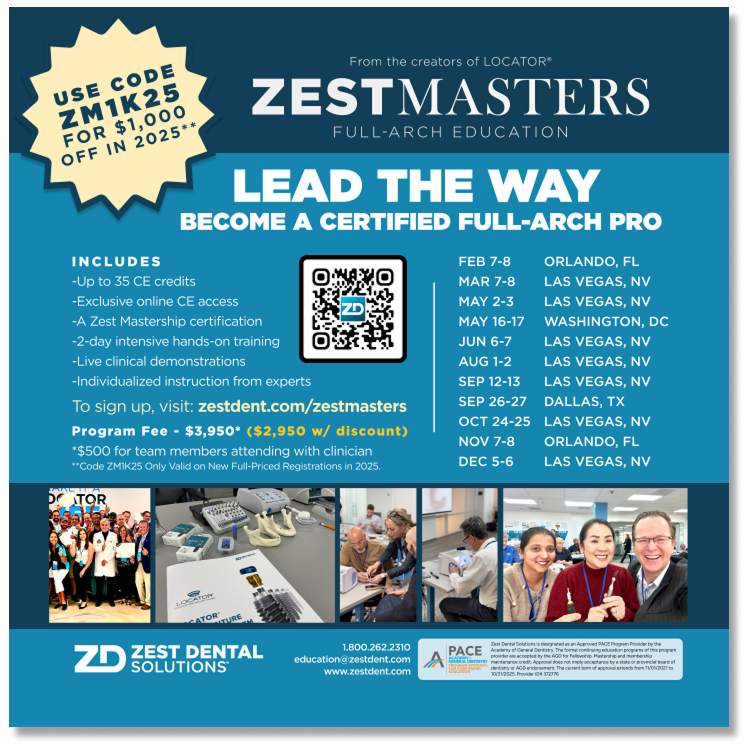
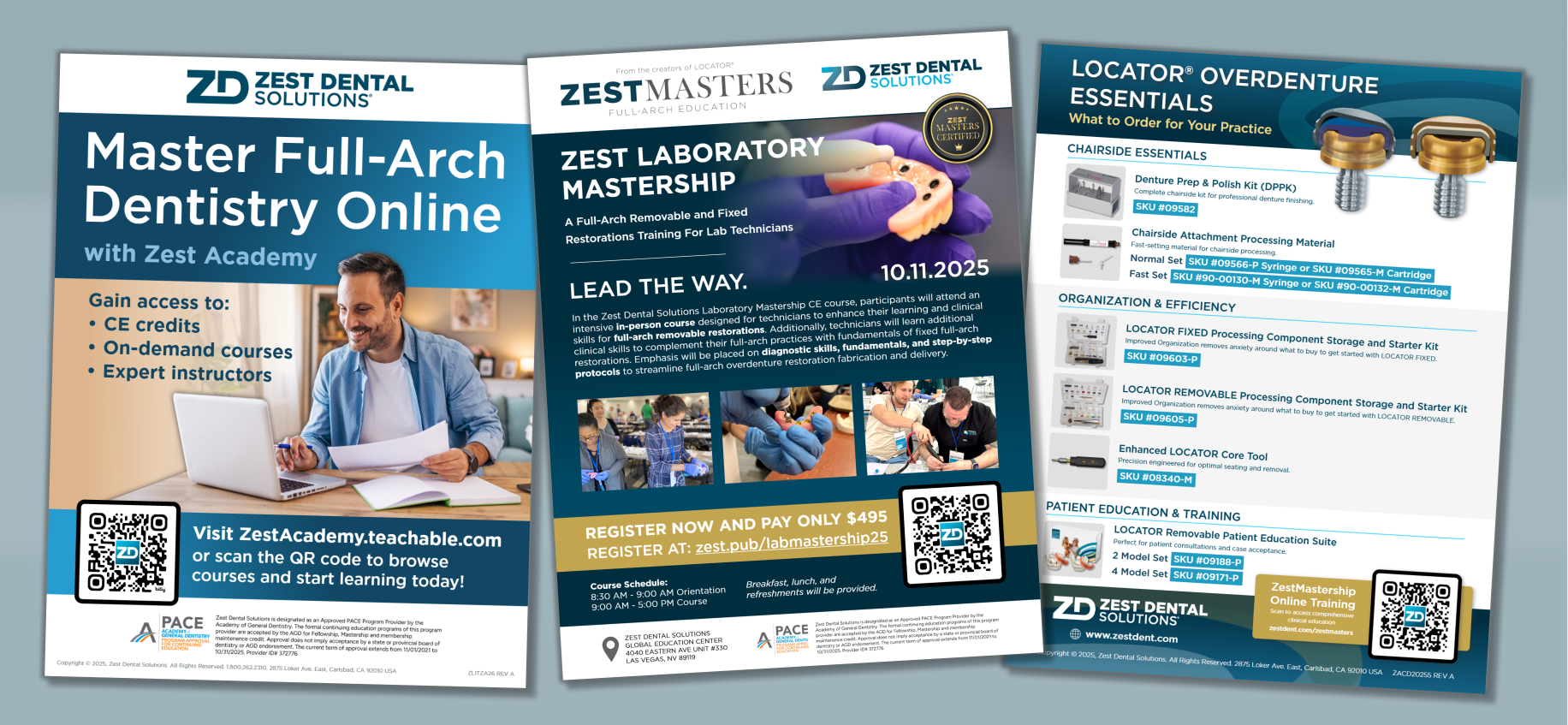
The turnaround came from repositioning ZestMasters as a career advancing opportunity as opposed the old strategy of product demonstration. We redesigned all course materials to lead with the clinical outcome, "treat patients you currently can't treat", and foregrounded the instructor's credentials/industry recognition before any mention of Zest products. Email and SMS campaigns drove enrollment by targeting dentists at the moments in their CE cycle when they were actively looking for courses.
THE RETAIL INSERT: $80,000 IN A SINGLE SEASON FROM ONE CARD
One of the highest-impact pieces in the entire campaign wasn't a digital ad or a course brochure. It was a small promotional card inserted into every retail shipment Zest sent to customers. This double sided direct-response insert, placed at the exact moment a dentist was already engaged with a Zest product, generated over $80,000 in direct revenue in one season.
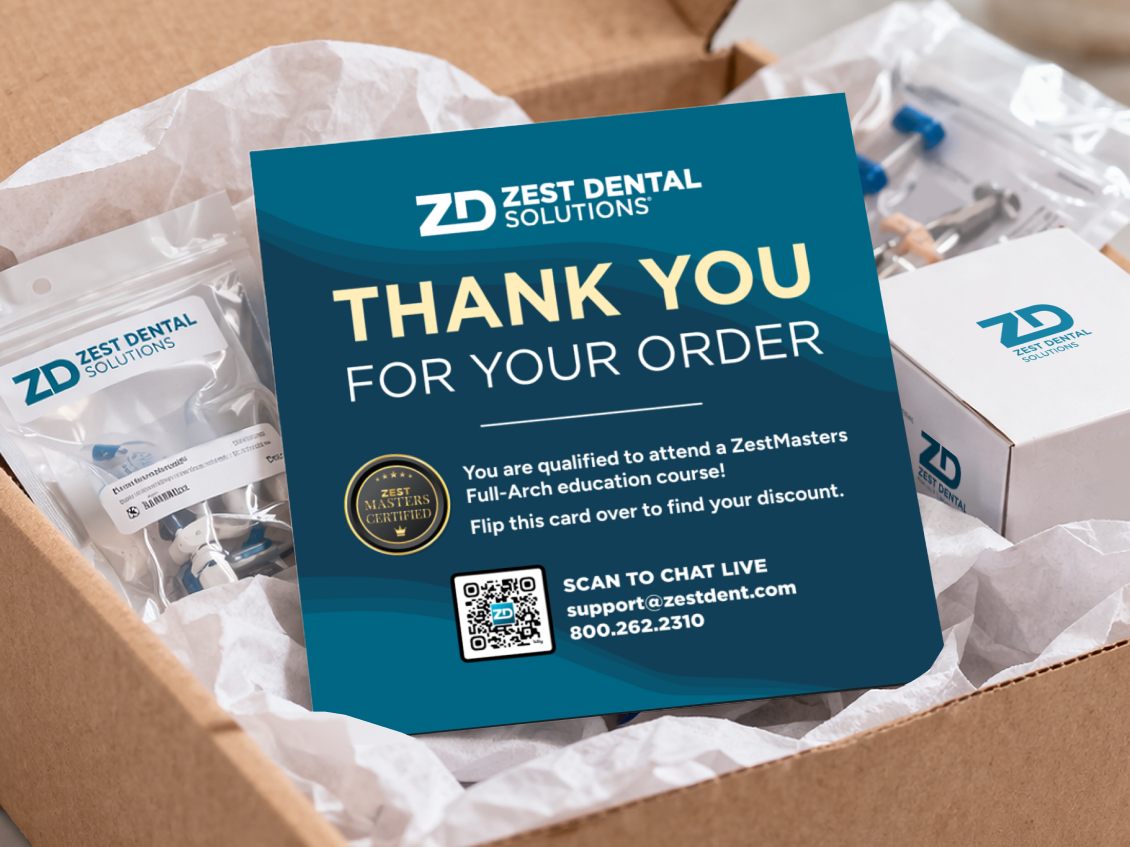
The card advertised ZestMasters enrollment with a promotional offer. A direct ask inserted at peak intent. The mechanic was deliberately low-friction: a dentist who had just received a Zest shipment was already in the Zest mindset, so this insert had the opportunity to convert that moment into a course registration. The lesson was one the whole team internalized: the highest-performing piece of the season cost almost nothing to produce and distribute.

EMAIL + SMS CAMPAIGNS DRIVING ENROLLMENT
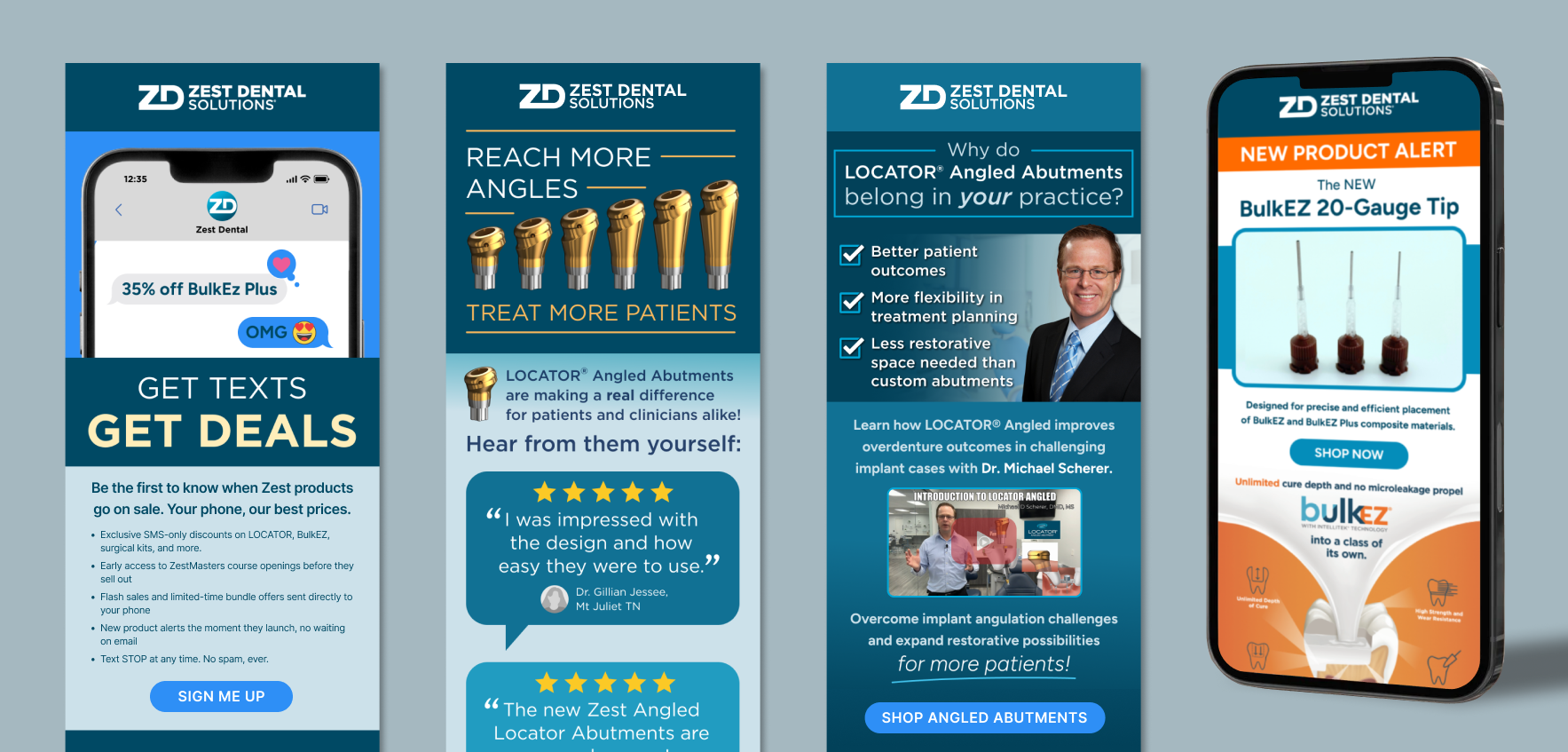
With course content and instructor credibility in place, the next job was getting the right dentists to register at the right time. We built a multi-channel outreach system of email sequences and SMS campaigns timed around CE renewal cycles and course opening windows.
Every piece was designed to feel like a professional communication, not a marketing blast. Dentists receive a lot of promotional email; ours earned attention by leading with clinical relevance and the name and face of an instructor they already recognized.
CLINICAL GUIDES & PATIENT MATERIALS CONVERTING TRAINING INTO PRACTIVE
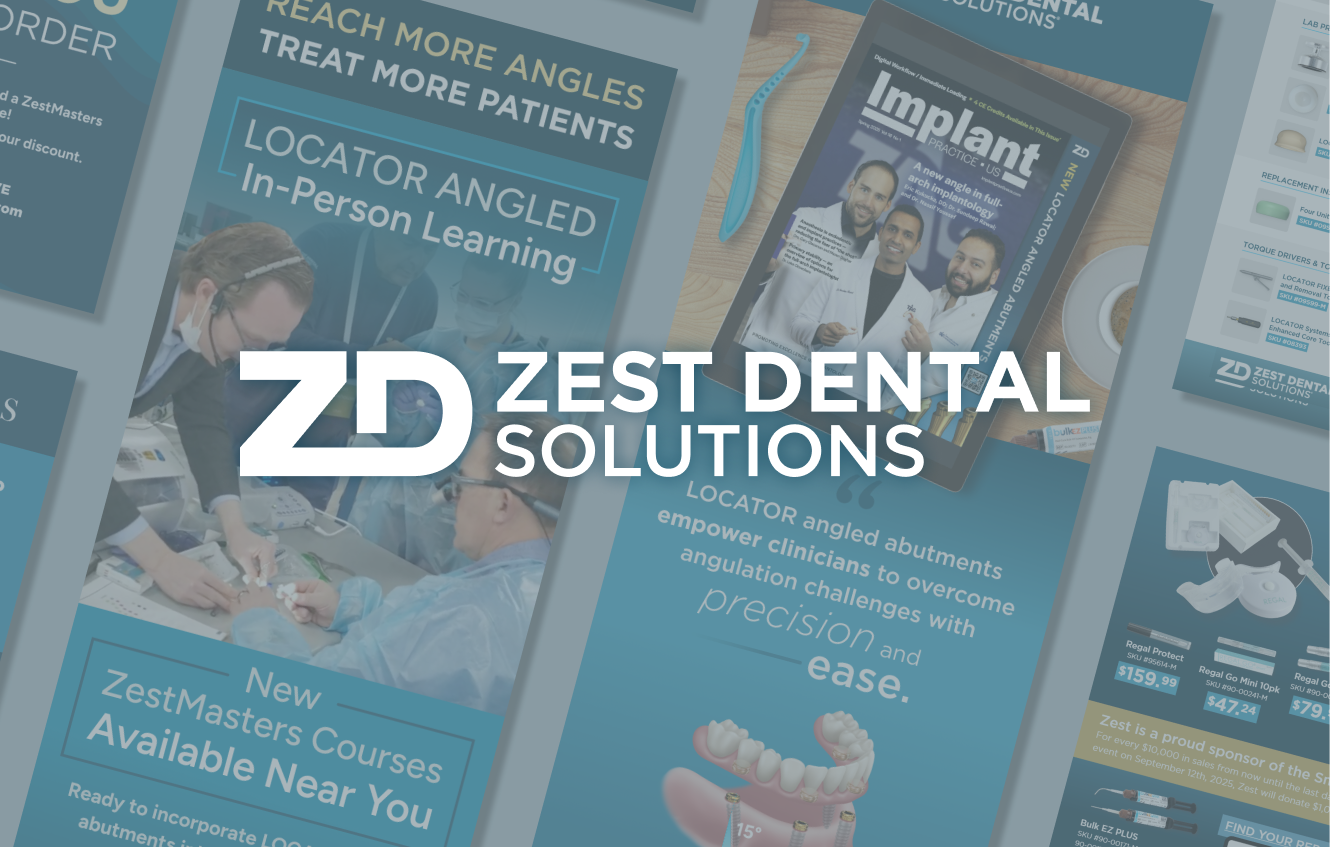
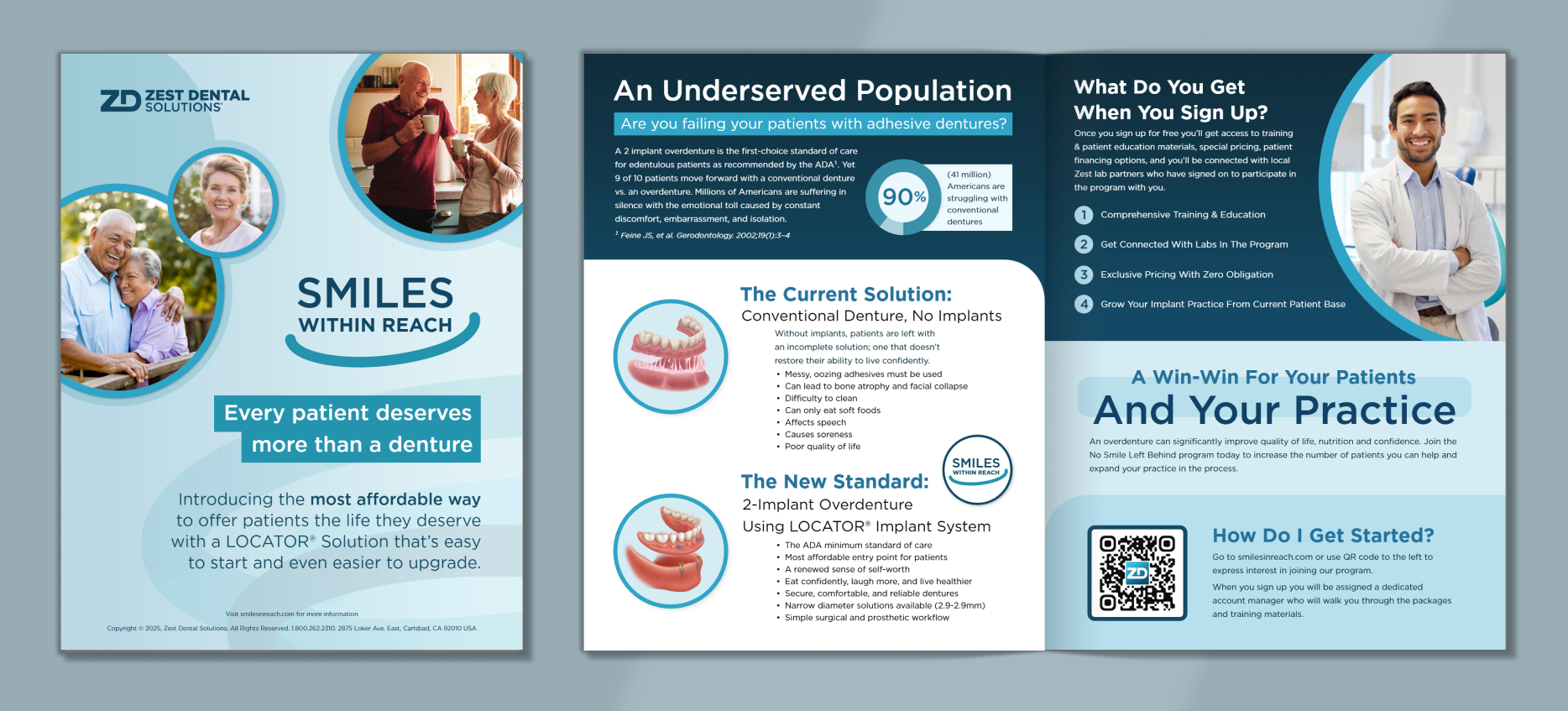
Once a dentist completed a ZestMasters course, the next design challenge was making it easy for them to act on what they'd learned. We created a system of clinical guides and patient-facing materials that gave newly-trained practitioners the tools to start treating patients immediately and having new conversations in the chair.
"Smiles Within Reach" was a patient-facing trifold dentists could hand directly across the chair — introducing implant-supported solutions to patients who might never have known they were an option. It was designed to start a conversation the dentist had just been trained to have.
BRAND SYSTEM - CONSISTENCY ACROSS EVERY TOUCHPOINT
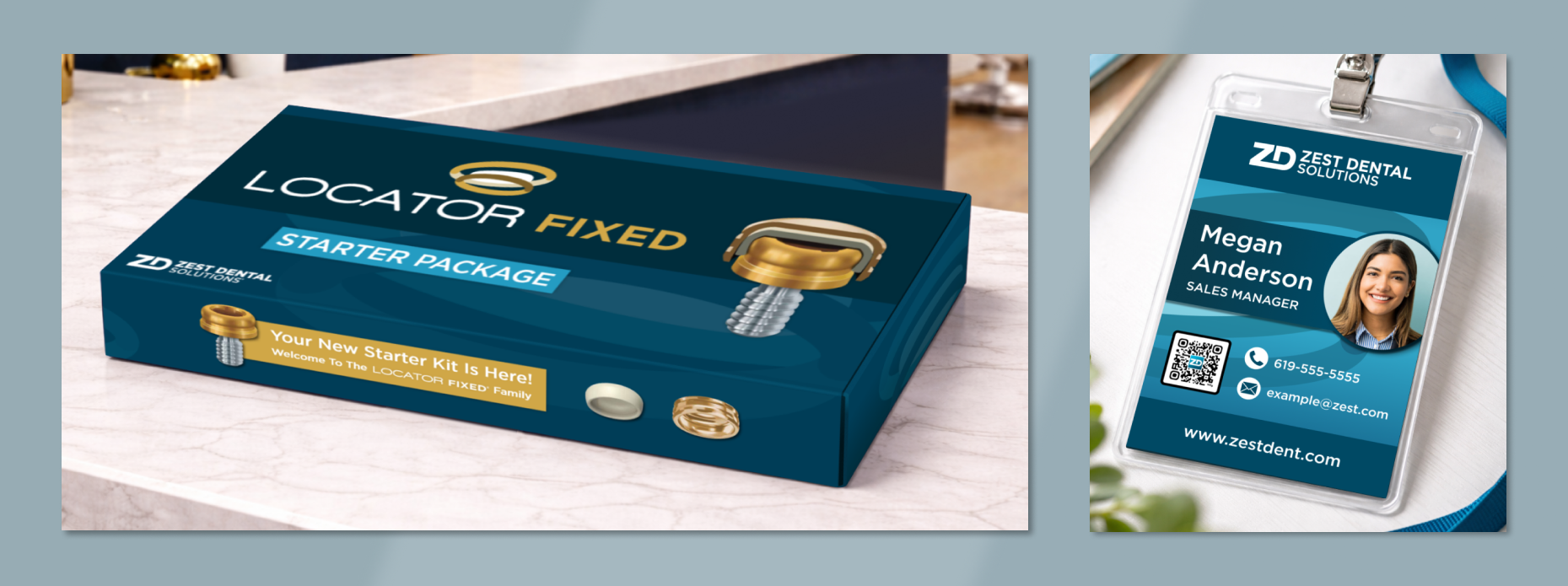
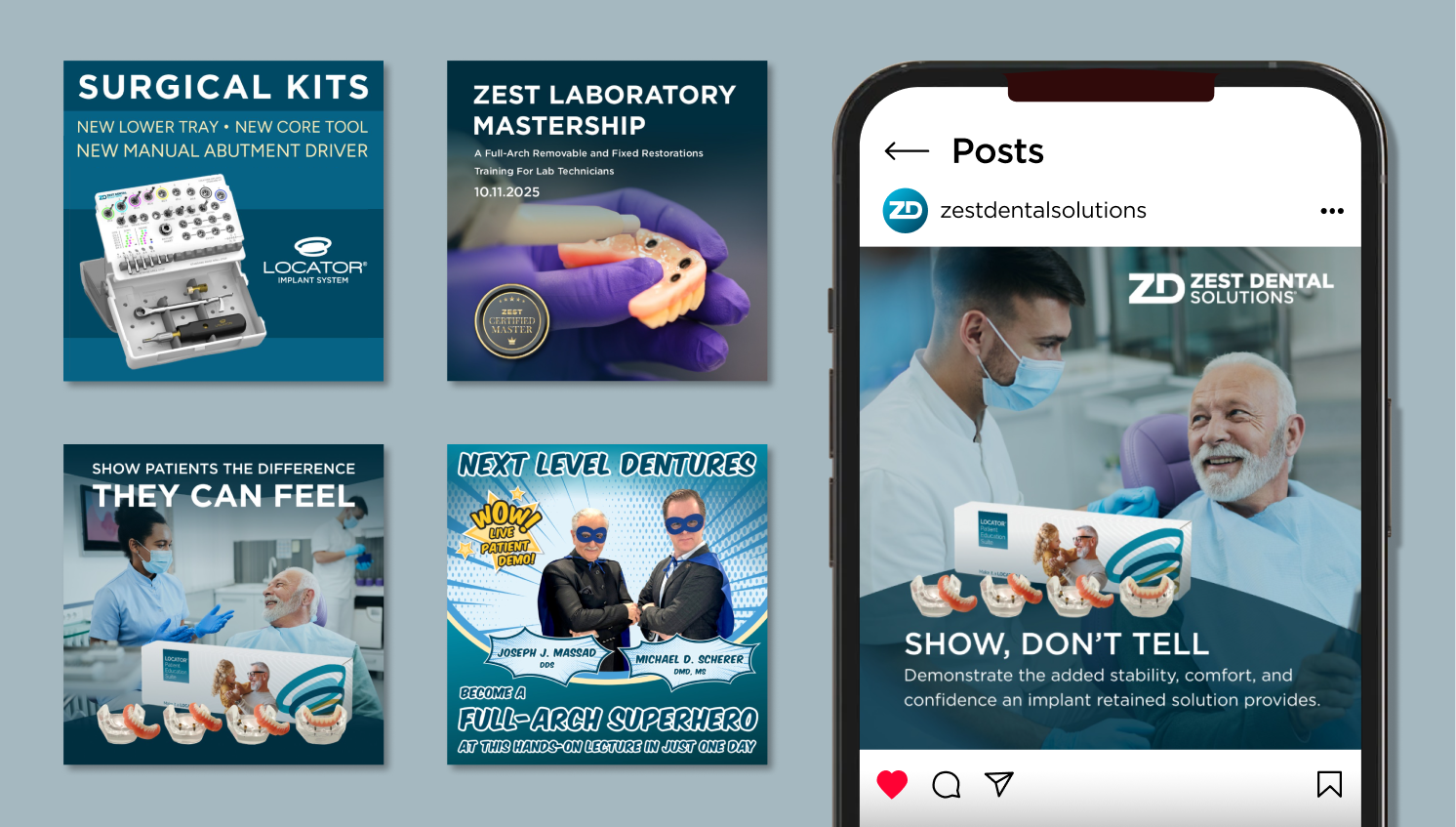
Every element of the Zest brand — from a highway billboard to a shipping insert — had to feel like it came from the same company making the same promise. For a four-person team covering print, digital, events, packaging, and sales enablement, that required a shared visual language strict enough to maintain quality across all of it.
DESIGN DECISIONS WORTH NOTING
Every element of the Zest brand — from a highway billboard to a shipping insert — had to feel like it came from the same company making the same promise. For a four-person team covering print, digital, events, packaging, and sales enablement, that required a shared visual language strict enough to maintain quality across all of it.

Course materials were built to foreground the instructor's photo, name, and credentials before any product messaging. In this market, who is teaching matters as much as what is being taught. Layouts that buried the instructor behind the Zest logo consistently underperformed ones that put the clinician's face first.

Every piece of education collateral led with the clinical outcome — "treat patients you currently can't treat," "expand into full-arch restorations" — before naming a product. The product was the means, not the message. That distinction shaped every headline, every benefit statement, every call to action.

Dentists are trained professionals who distrust marketing that feels like marketing. The visual system — navy, teal, structured typography, clinical photography — had to feel at home in a CE catalog or on a conference table. Not a consumer ad. That constraint sharpened every design decision.

Dentists are trained professionals who distrust marketing that feels like marketing. The visual system — navy, teal, structured typography, clinical photography — had to feel at home in a CE catalog or on a conference table. Not a consumer ad. That constraint sharpened every design decision.
OUTCOMES & REFLECTION
The education-first strategy gave Zest something most dental product companies don't have: a reason for dentists to seek them out. When the course delivers a real, practice-expanding skill — and the instructor is someone they already trust — Zest earns a relationship that a product catalog never could. ZestMasters going from half-empty to fully sold out with waitlists was the clearest proof that the strategy worked.
The $80,000 generated by a single retail insert in one season reinforced a principle I carry into every project: the highest-leverage design isn't always the most visible one. Sometimes it's a small card in a box, placed at exactly the right moment.
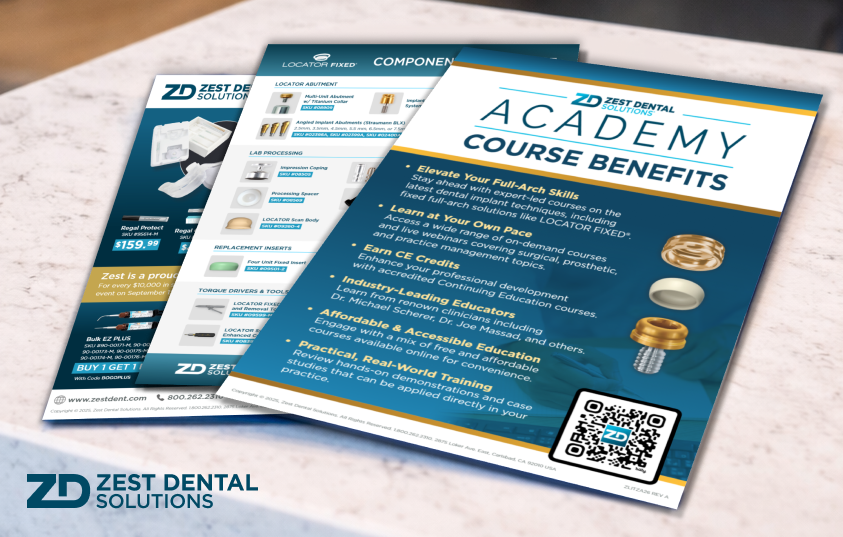
What I'm proudest of is the coherence. A dentist could encounter Zest on a billboard, receive a ZestMasters brochure in the mail, attend a course with an instructor they already respected, and unbox their first Starter Package — and every single touchpoint felt like the same brand making the same promise. In a profession built on trust, that consistency wasn't aesthetic polish. It was the product.